

As a supplier of grout mixer machines, I often encounter questions from customers about the capabilities of our equipment. One common query is whether a grout mixer machine can be used for mixing grout with additives. In this blog post, I will delve into this topic, exploring the technical aspects, benefits, and considerations when using grout mixer machines for grout - additive mixtures.
Technical Feasibility
Grout mixer machines are designed to blend grout components thoroughly. Most modern grout mixer machines, such as the Electric Grout Mixer, are equipped with powerful motors and well - designed mixing blades. These features enable them to handle the task of incorporating additives into grout.
The mixing process involves breaking down the grout particles and dispersing the additives evenly throughout the mixture. The high - speed rotation of the mixing blades in a grout mixer creates a turbulent flow within the mixing chamber. This turbulence helps in breaking the agglomerates of grout and additives, ensuring a homogeneous blend.
For instance, when adding water - reducing additives to grout, the mixer's action ensures that the additive is uniformly distributed. This is crucial because an uneven distribution can lead to inconsistent properties in the final grout, such as variations in workability and strength.
Benefits of Mixing Grout with Additives
There are several benefits to using grout with additives, and a grout mixer machine plays a vital role in achieving these benefits.
Improved Workability
Additives like plasticizers can significantly improve the workability of grout. When mixed properly using a Grout Pump Mixer, the plasticizer reduces the friction between the grout particles, making it easier to pump and place. This is especially important in large - scale construction projects where the grout needs to be transported over long distances or into complex structures.
Enhanced Strength
Some additives, such as silica fume or fly ash, can enhance the strength of grout. When incorporated evenly into the grout using a cement grout mixer machine, these additives react with the cementitious components of the grout. This reaction forms additional hydration products, which increase the density and strength of the grout over time.
Durability
Additives can also improve the durability of grout. For example, corrosion inhibitors can protect the reinforcement bars in concrete structures when grout is used for their encapsulation. A well - mixed grout with corrosion inhibitors, achieved by a high - quality grout mixer machine, forms a protective layer around the reinforcement, preventing the ingress of moisture and aggressive chemicals.
Considerations When Mixing Grout with Additives
While using a grout mixer machine for mixing grout with additives offers many advantages, there are also some considerations that need to be taken into account.
Compatibility
Not all additives are compatible with all types of grout. Before adding an additive, it is essential to check the manufacturer's recommendations. Some additives may react negatively with certain grout components, leading to issues such as premature setting or reduced strength. A professional grout mixer machine operator should be aware of these compatibility issues and follow the proper mixing procedures.
Mixing Time
The mixing time is crucial when adding additives to grout. Insufficient mixing time can result in an uneven distribution of the additive, while over - mixing can cause the grout to lose its workability or even lead to segregation. Different additives may require different mixing times, and it is important to follow the guidelines provided by the additive manufacturer.
Dosage
The correct dosage of the additive is also critical. Too little of an additive may not achieve the desired effect, while too much can have adverse effects on the grout properties. A reliable grout mixer machine should be used in conjunction with accurate measuring equipment to ensure the correct dosage of additives is added to the grout.
Types of Grout Mixer Machines Suitable for Mixing with Additives
There are different types of grout mixer machines available, each with its own advantages for mixing grout with additives.

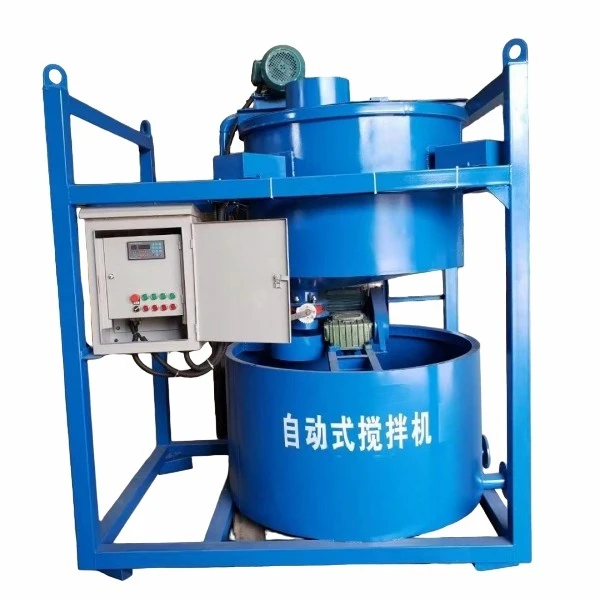
Electric Grout Mixer
The Electric Grout Mixer is a popular choice for small to medium - scale projects. It is easy to operate and can provide sufficient mixing power to incorporate additives into grout. The electric motor ensures a consistent mixing speed, which is important for achieving a homogeneous mixture.
Grout Pump Mixer
A Grout Pump Mixer combines the functions of mixing and pumping. This type of machine is ideal for large - scale projects where the grout needs to be mixed and transported quickly. The continuous mixing action during the pumping process helps to maintain the homogeneity of the grout - additive mixture.
Cement Grout Mixer Machine
The Cement Grout Mixer Machine is specifically designed for mixing cement - based grouts. It can handle high - volume mixing and is suitable for projects that require large quantities of grout with additives. The heavy - duty construction of these machines ensures long - term durability and reliable performance.
Conclusion
In conclusion, a grout mixer machine can indeed be used for mixing grout with additives. The technical capabilities of modern grout mixer machines, such as the ability to create a turbulent flow and break down agglomerates, make them well - suited for this task. Mixing grout with additives offers numerous benefits, including improved workability, enhanced strength, and increased durability.
However, it is important to consider factors such as compatibility, mixing time, and dosage when using additives. By choosing the right type of grout mixer machine, such as an electric grout mixer, grout pump mixer, or cement grout mixer machine, and following the proper mixing procedures, users can achieve high - quality grout - additive mixtures.
If you are interested in purchasing a grout mixer machine for your project, we are here to assist you. Our wide range of grout mixer machines is designed to meet the diverse needs of different construction projects. Contact us to discuss your requirements and explore the best solutions for your grouting needs.
References
- ASTM International. (20XX). Standard specifications for grout used in construction.
- Additive Manufacturer's Technical Bulletins. (Various years). Information on grout additives and their use.
- Construction Industry Research Reports. (20XX - 20XX). Studies on the performance of grout - additive mixtures.