

Cement Grout Pump
About us
Henan Tytion Machinery Co., Ltd was established in 2003. Now it owns total assets over 3 million RMB with 90 staff including 20 professional technicians and 12 engineers. Engineers with the college degree take up more than 70% of the total staff number. The company has new modern standard workshop of 16,000 m². Henan Tytion Machinery is a professional construction machinery manufacturer integrating design, research and development, production and sales. The company is located in Zhengzhou City, Henan Province, with convenient transportation. The company mainly produces various types of grout pumps, dry and wet shotcrete machine, small drilling rigs and other construction equipment, and its products have been well received by customers.
With the company's foundation laid, under the guidance, supervision and strict requirements of the leaders, and with the active coordination and cooperation of colleagues from various departments, the company has achieved remarkable results in the past few years. It has successfully opened up markets in Southeast Asia, Africa, South America, the Middle East and other countries and regions. In the future development process, we will always based on integrity and guaranteed by technology, we sincerely serve every customer.
Why choose us?
Professional manufacturer
Henan Tytion Machinery is a professional construction machinery manufacturer integrating design, research and development, production and sales.
Customized services
Design and manufacture machines for you as your special requirements, provide you with project, process design, and purchase program.
Quality assurance
All of our products comply with international quality standards and are greatly appreciated in a variety of different markets throughout the world.we have received ISO9001 certificate,CE certificate, etc.
Rich experience
Dedicated to strict quality control and attentive customer service, our experienced staff is always available to discuss your requirements and ensure complete customer satisfaction.


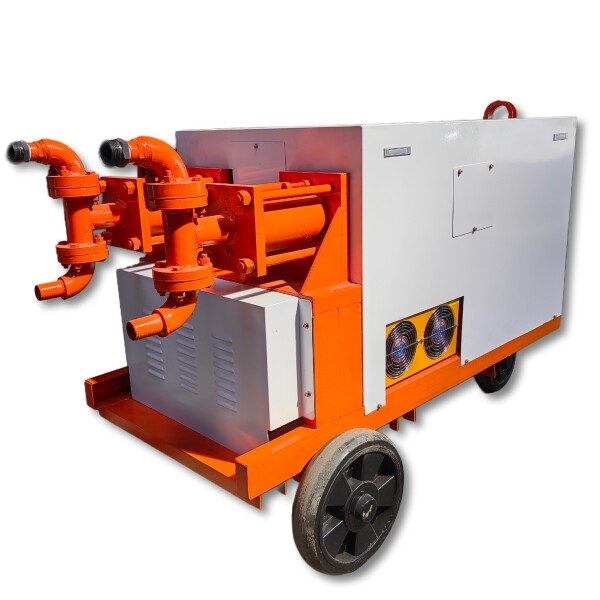
Cement grout pumping is a valuable tool for ground remediation, also known as land remediation. This is the process of injecting environmental compounds into hazardous or contaminated ground to remove pollutants and/or prevent migration. This process protects humans and animals from contamination.
Benefits of Cement Grout Pump
They streamline the grouting process by delivering grout at a consistent rate. This not only reduces the time required to complete a project but also ensures a uniform application of grout, which is essential for structural integrity.
Without a cement pump, the grout application process can be inconsistent and time-consuming, leading to delays in project completion and potential weaknesses in the structure.
The precision of grout application plays a crucial role in the overall strength and stability of a structure. With a pump, the grout is applied uniformly and accurately, ensuring that all gaps are filled and sealed properly.
This leads to stronger, more stable structures that are built to last. The use of a pump eliminates the risk of human error in grout application, thereby enhancing the quality of construction work.
By automating the grouting process, cement pumps significantly reduce labor costs. Workers no longer need to manually mix and apply grout, freeing them up to focus on other tasks.
Additionally, these pumps minimize waste by applying the exact amount of grout needed, thereby reducing material costs. In the long run, the cost savings achieved through these pumps can significantly impact the overall cost of a construction project.
Types of Cement Grout Pump
Manual pumps
Manual pumps require manual effort to operate. They are usually hand or foot operated, making them portable and easy to use. These pumps are ideal for small-scale projects where there is no need for high pressure or volume.
Despite their simplicity, manual pumps can be highly effective in their job and are often a cost-effective choice for small projects or for locations where electricity is not readily available.
Electric pumps
Electric pumps are powered by an electric motor, making them more powerful than manual pumps. They can handle larger volumes of grout and can pump it over longer distances. Electric pumps are perfect for medium to large-scale projects where high pressure and volume are required.
With their advanced functionality, these pumps can greatly improve the efficiency and speed of the grouting process, making them a popular choice among construction professionals.
Hydraulic pumps
Hydraulic pumps are the most powerful of all, capable of handling very high pressures and volumes. These pumps use hydraulic fluid to create pressure, which then pushes the grout through the hose or pipeline.
Hydraulic pumps are typically used in large-scale industrial or commercial projects where high strength and durability are necessary. These pumps are designed to withstand tough conditions and heavy-duty use, making them a reliable choice for demanding construction projects.
Application of Cement Grout Pump
1.Foundation stabilization
Cement grout pump is used to stabilize and strengthen the foundation of structures. It can fill voids and improve the load-bearing capacity of the soil beneath foundations, preventing settlement and improving overall stability.
2.Soil improvement
Cement grout pump can be used to improve the properties of weak or loose soils. It helps increase soil strength, reduce permeability, and enhance overall stability, allowing for the construction of structures in otherwise challenging ground conditions.
3.Tunneling and underground structures
Cement grout pump is essential for tunnelling projects to control water ingress and stabilize surrounding soils or rocks. It can seal off water leaks, prevent soil movement, and create a stable environment for the excavation and construction of tunnels and underground structures.
4.Dam and embankment sealing
Cement grout pump is used in dam and embankment construction to prevent water seepage and improve overall structural integrity. It involves injecting grout into potential pathways for water to reduce permeability and create an impermeable barrier.
5.Concrete crack repair
Cement grout pump is employed to repair cracks in concrete structures such as buildings, bridges, and dams. It involves injecting grout into the cracks, which fills and seals them, restoring structural integrity and preventing further deterioration.
6.Joint and void filling
Cement grout pump is employed to fill voids, joints, or gaps in concrete structures. It ensures structural integrity, improves durability, and enhances resistance to water penetration. It is commonly used in precast concrete construction and infrastructure repair.
7.Groundwater control
Cement grout pump is used to control groundwater flow in construction projects, such as underground excavations or foundation construction in water-bearing soils. It involves injecting grout into the ground to create a barrier that reduces water inflow and stabilizes the excavation.
- Rising demand for construction activities across the globe, especially in developing economies, is a major growth driver for the cement grout pumps market. The need for infrastructure development, urbanization, and industrialization is fueling the demand for cement grout pumps.
- Technological advancements in cement grout pumps, such as the introduction of automated and remote-controlled pumps, are driving market growth. These innovations not only improve the efficiency and accuracy of grouting operations but also reduce labor costs.
- The increasing focus on sustainable construction practices and the use of eco-friendly materials is creating opportunities for cement grout pump manufacturers. The shift towards green building materials and construction methods is driving the adoption of cement grout pumps that can handle these materials effectively.
- Growing investments in the oil and gas industry, particularly in offshore drilling activities, are boosting the demand for cement grout pumps. These pumps are essential for ensuring the stability and integrity of subsea structures, pipelines, and platforms.
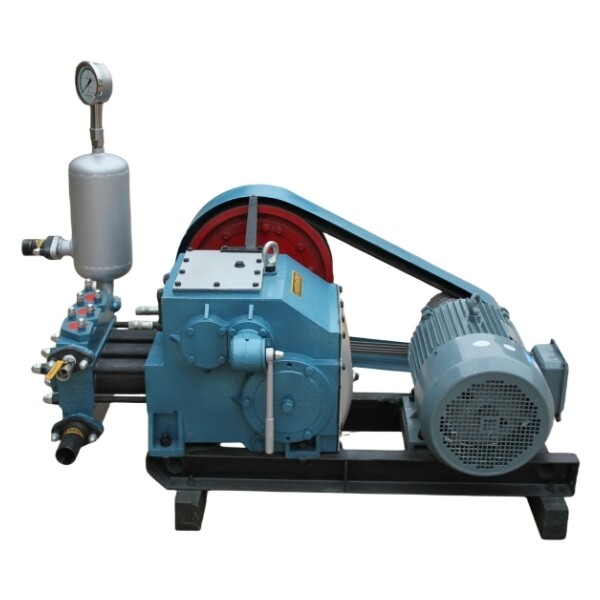
- The increasing adoption of automated and digitized construction technologies presents opportunities for cement grout pump manufacturers. Integration with digital construction platforms and the Internet of Things (IoT) can enhance the efficiency and productivity of cement grout pump ing operations.
- The growing focus on infrastructure rehabilitation and repair projects in mature markets offers potential growth opportunities for cement grout pump s. The need to maintain and upgrade existing structures, such as bridges, tunnels, and buildings, drives the demand for grouting solutions.
- Expansion of the mining industry, particularly in emerging economies, creates opportunities for cement grout pump suppliers. The mining sector relies on grouting solutions for ground stabilization, tunnel construction, and shaft sealing, driving the demand for specialized cement grout pumps.
- The development of environmentally friendly grouting materials and additives presents opportunities for innovation in the cement grout pumps market. Manufacturers can capitalize on the demand for sustainable and non-toxic grouting solutions in construction and civil engineering projects.
How to Choose a Suitable Cement Grout Pump
1.Types of grout pumps
Generally, when pumping cement based grouts, the common pump types are piston pumps, Helical rotor (worm drive pumps) and peristaltic pumps. Piston pumps generally develop higher pressures and lower outputs however in most cases they also result in the pulsation of grout during pumping. By comparison, worm drive pumps are generally lower in pressure, though the flow rates are usually higher, and they deliver a smooth pulsation free delivery of grout.
2.Drive and size of grout machines
Grout pumps usually come in electric, hydraulic, and pneumatic drive. This will impact your grout pump choice as each drive option has their own advantages and disadvantages. The size of the grouting job, the availability of power on site, the distance and pressure to be pumped, the product that you are pumping, mobility and many other factors will influence your choice of machine.
3.Materials
With so many different grouts available for applications such as structural repairs, mining applications (including cable bolt installation), flooring toppings and fire suppression, the first consideration when selecting a grout pump will be the type of material you want to pump. As a rule “choose your product then
choose your grout pump“.
4.Aggregate
Whilst aggregates are generally added to grouts to provide bulk and increase strength, the different properties of aggregates have a direct impact on the grouts thermal properties, durability and work-ability. Careful consideration must be given to the type of grout pump selected when aggregates are used, especially in relation to the size and concentration of the aggregates.
5.Pumping
As a general rule, hose lengths should be as short as possible to reduce pressures and facilitate the flow of grout. Where possible the
operator should use the largest diameter hose possible straight from the grout pump. Restrictions in the grout hose diameter especially at the pump outlet create back pressure and reduce the efficiency of the pump. In some cases where long delivery distances are required it may be necessary to use strategies such as:
- Use larger diameter hoses,
- Bury hoses below the surface to reduce heat transfer,
- Use chilled or underground water.
Our Factory
Henan Tytion Machinery is a professional construction machinery manufacturer integrating design, research and development, production and sales. The company is located in Zhengzhou City, Henan Province, with convenient transportation. The company mainly produces various types of grout pumps, dry and wet shotcrete machine, small drilling rigs and other construction equipment, and its products have been well received by customers.


FAQ
We're well-known as one of the leading cement grout pump manufacturers and suppliers in China. Please rest assured to buy used cement grout pump for sale here from our factory. For price consultation, contact us.
grout pumping detergents, grout pumping liability, customized cement grout pump