

Hey there! As a supplier of mortar pumps, I've been getting a lot of questions lately about using these pumps for underwater construction. It's an interesting topic, and there are definitely some modifications that need to be made to make a regular mortar pump suitable for underwater work. In this blog post, I'm going to break down those modifications and give you a better understanding of what it takes to use a mortar pump in an underwater environment.
Understanding the Challenges of Underwater Construction
Before we dive into the modifications, let's first talk about the challenges that come with underwater construction. The underwater environment is a whole different ballgame compared to above - water work. The most obvious challenge is the water pressure. As you go deeper underwater, the pressure increases significantly, and this can put a lot of stress on the mortar pump.
Another challenge is the corrosive nature of water, especially saltwater. Saltwater is highly corrosive and can cause the pump's components to rust and deteriorate over time. Additionally, the water can interfere with the pump's electrical systems, leading to malfunctions if not properly protected.
Modifications for the Pump Body
The first area that needs modification is the pump body. A standard mortar pump is not designed to withstand the high water pressure and corrosive effects of the underwater environment.
Pressure Resistance
To make the pump body more pressure - resistant, we need to use stronger materials. For example, instead of the regular steel used in above - water pumps, we can opt for high - strength stainless steel. Stainless steel not only has better strength but also offers excellent corrosion resistance.
We also need to reinforce the pump body's structure. This can be done by adding extra ribs or thickening the walls in critical areas. These reinforcements help the pump body to withstand the external pressure without deforming or cracking.
Corrosion Protection
In addition to using stainless steel, we can apply a special anti - corrosion coating to the pump body. This coating acts as a barrier between the metal and the water, preventing direct contact and reducing the risk of corrosion. There are different types of anti - corrosion coatings available, such as epoxy coatings, which are known for their durability and resistance to water and chemicals.
Modifications for the Pump Mechanism
The pump mechanism is the heart of the mortar pump, and it also requires some adjustments for underwater use.
Sealing
One of the most important modifications is improving the sealing of the pump mechanism. Water can easily seep into the pump if the seals are not tight enough, causing damage to the internal components. We need to use high - quality seals that are specifically designed for underwater applications. These seals are made from materials that can withstand the water pressure and resist the corrosive effects of the water.
For example, rubber seals with a high shore hardness are often used. They can maintain their shape and sealing performance even under high pressure. We also need to ensure that all the joints and connections in the pump mechanism are properly sealed to prevent water ingress.
Lubrication
The lubrication system of the pump also needs to be modified. In an underwater environment, the regular lubricants used in above - water pumps can be washed away by the water. We need to use water - resistant lubricants that can stay in place and provide adequate lubrication to the moving parts.
Some water - resistant lubricants are designed to form a thick film on the surfaces of the moving parts, which helps to reduce friction and wear even in the presence of water.
Modifications for the Electrical System
Most modern mortar pumps have electrical components, such as motors and control systems. These electrical systems are extremely vulnerable to water damage.
Waterproof Enclosures
The first step is to place all the electrical components in waterproof enclosures. These enclosures are designed to keep water out while still allowing for proper ventilation and heat dissipation. They are usually made of materials like plastic or fiberglass, which are lightweight and have good waterproof properties.
Sealed Wiring
All the wiring in the pump's electrical system needs to be properly sealed. We can use waterproof cable glands to seal the entry points of the cables into the enclosures. This prevents water from seeping into the cables and causing short - circuits.
We also need to use waterproof connectors for all electrical connections. These connectors are designed to maintain a good electrical connection even when submerged in water.

Modifications for the Delivery System
The delivery system of the mortar pump, which includes the hoses and nozzles, also needs some changes for underwater use.
Hose Selection
We need to choose hoses that are suitable for underwater applications. These hoses should be made of materials that are resistant to water, abrasion, and pressure. For example, reinforced rubber hoses are often used because they can withstand the high pressure and the movement of the water.
The hoses also need to be properly secured to prevent them from being damaged by the water current or getting tangled. We can use clamps and brackets to keep the hoses in place.
Nozzle Design
The nozzle design is crucial for underwater construction. The nozzle needs to be able to deliver the mortar accurately in the underwater environment. We may need to modify the nozzle to increase its thrust and ensure that the mortar can reach the desired location.
For example, we can design nozzles with a more streamlined shape to reduce the resistance of the water and improve the flow of the mortar.
Our Product Offerings
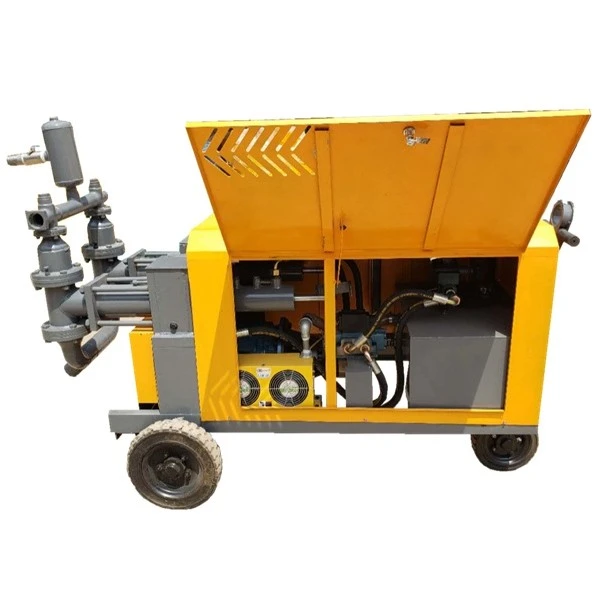
As a mortar pump supplier, we have a range of products that can be modified for underwater construction. Check out our Hydraulic Mortar Pump, which is a powerful and reliable option. If you need something more compact, our Small Grout Pump can be easily adapted for underwater use. And for those who need a high - performance solution, our Hydraulic Grout Pump is a great choice.
Contact Us for More Information
If you're involved in underwater construction and need a mortar pump, don't hesitate to reach out to us. We have the expertise and experience to modify our pumps to meet your specific needs. Whether you're working on a small - scale project or a large - scale infrastructure development, we can provide you with the right solution.
We understand that every project is unique, and we're committed to working closely with you to ensure that the modified mortar pump meets all your requirements. So, if you have any questions or want to discuss your project in more detail, just get in touch with us. We're here to help you make your underwater construction project a success.
References
- Construction Equipment Handbook. A comprehensive guide on the use and modification of construction equipment.
- Underwater Engineering Manual. This manual provides in - depth knowledge about the challenges and solutions in underwater construction.
- Pump Manufacturer's Technical Documents. These documents offer detailed information about the design and modification of mortar pumps.